
THE SOCIAL LIFE OF PLAYING CARDS
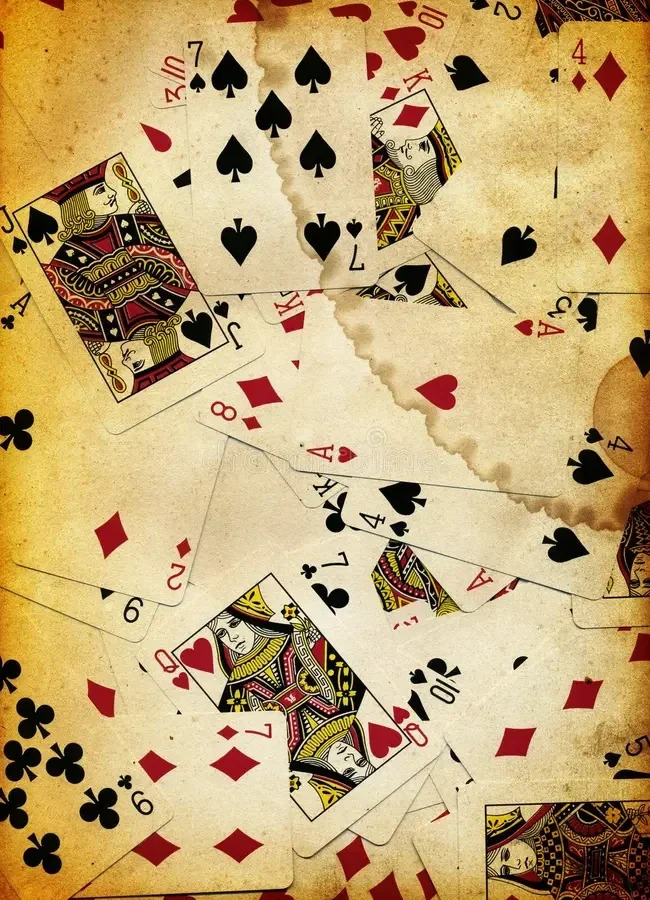
Playing cards are often seen as just a game, but their history shows they are much more...they are objects that connect people, reflect culture, and shape communities. Cards likely originated in China and traveled across Asia and Europe, eventually reaching the United States, evolving in design, suit symbols, and social roles along the way. French suits, hearts, diamonds, clubs, and spades became standard, creating a shared visual and cultural language. The spade, in particular, carries centuries of tradition, appearing in both luxurious hand-painted decks of the past and the simple, everyday decks used in families and community games today.
Why should I care?
Playing cards are something anybody can own, and many families already have some in their homes. It's always been more than a game; it's been an opportunity for connection. It's an item that can be used for more than one thing...playing cards are universal and can be personalized to people's liking. It's something you, a family member, friend, or even a coworker can pick up. All it takes is a deck and initiative.
Won't you try?

LEARNING ABOUT PLAYING CARDS...
We offer a diverse range of specialized graphic design services, meticulously tailored to meet your individual needs. Our approach is focused on understanding and responding to your unique vision, providing effective and visually stunning solutions.

History of Playing Cards
Primary Sources:
-
The History of Playing Cards by Roger Tilley
-
WOPC: History of Playing Cards webpage
-
Early French-suit deck images (archival photos)

Card Games As Social Practice
Primary Sources:
-
Stef Eastoe, Playing Cards, Cricket, and Carpentry
-
Mary Lane Potter, Between Chaos and Light
-
Historical photographs of families or community groups playing cards

The Game Of Spades
Primary Sources:
-
Modern Spades score sheets
-
Interviews or images of Spades players
-
Newspaper articles or personal accounts of Spades in communities

Cultural & Artistic Significance Of Cards
Primary Sources:
-
Shijia Yu, Playing Cards: The Art of the Deal
-
19th-century illustrated card decks
-
Joker card design evolution
About playing cards
Beyond just looking nice or being part of a game, playing cards have always been about people. In Victorian asylums, Stef Eastoe shows that cards helped structure daily life, got people interacting, and even created a sense of community. Mary Lane Potter talks about modern card playing, showing how games help people figure out who they are, follow social rules, and connect with others. Both of these examples make it clear: cards are more than entertainment. They’re a way for people to build relationships and share experiences.
This exhibit is all about Spades, a game that’s been part of families and communities across the U.S. for generations. Visitors will see historical decks that show where the spade symbol came from, photos of people playing cards together, and modern score sheets that capture the rules, inside jokes, and traditions people pass down. Each piece shows that cards aren’t just games. They’re meaningful objects that bring people together.
By looking at these artifacts, visitors can think about more than just the history of cards. They can see how cards help create spaces where people gather, connect, and tell stories. Whether it’s for fun, strategy, or just bonding, games like Spades show that even ordinary objects can have a big impact on culture and community.

During World War II, the United States government explored innovative methods to assist its soldiers who were in enemy prisoner of war camps. One ingenious way that they used was to send out specially designed playing cards.
FUN FACT

If you add up all 52 cards (Ace=1, King=13), plus one Joker, you get 365. Adding the second Joker accounts for a leap year.
FUN FACT

The King of Hearts is often called this because he appears to be stabbing himself in the head with his sword (originally an axe).
FUN FACT

The rarest and most costly deck of playing cards is now on display in New York City at the Metropolitan Museum of Art. It is a deck of Tarot cards, created in the Netherlands in the middle of the fifteenth century.
FUN FACT
SOURCES
“‘Photographs of Pilots Playing Cards’ .” National Archives and Records Administration, National Archives and Records Administration, catalog.archives.gov/id/153724625. Accessed 22 Feb. 2026.
My personal playing cards, "Kortlek."
Wintle, Simon. “The History of Playing Cards.” The World of Playing Cards, The World of Playing Cards, 21 Dec. 2025, www.wopc.co.uk/the-history-of-playing-cards/.
SECONDARY SOURCES
“The History of Playing Cards, with Anecdotes of Their Use in Conjuring, Fortune-Telling, and Card-Sharping.”
Notes and queries s3-VII.158 (1965): 26–26. Web.
Potter, Mary Lane. “Between Chaos and Light: Calvin, Card Playing,
Comic Books, Sex, God, and Dancing.” Spiritus 16.1 (2016): 78–98. Web.
Eastoe, Stef. “Playing Cards, Cricket and Carpentry: Amusement, Recreation and Occupation in
Caterham Imbecile Asylum.” Journal of Victorian Culture : JVC 24.1 (2019): 72–87. Web.
Create Your Own Website With Webador